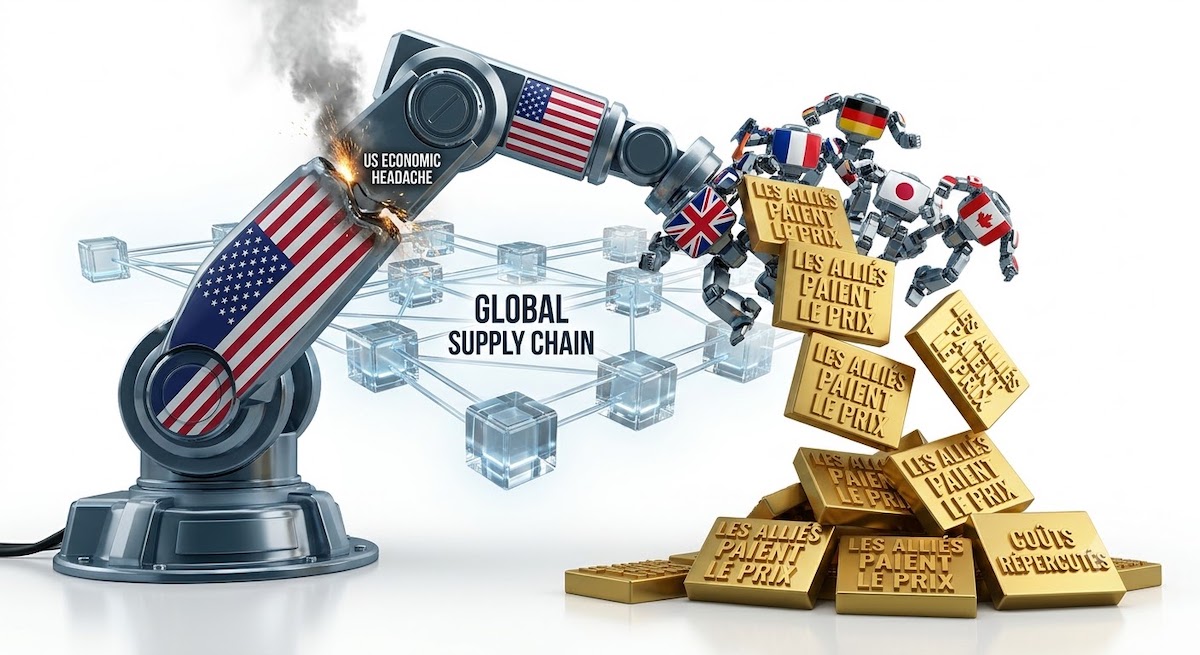
Listen up: your grocery bill, rent, and that suspiciously expensive phone upgrade aren't just "vibes" in 2026—they're symptoms of a bigger power play. US inflation isn't cooling as fast as hoped, stuck stubbornly above the Fed's 2% target amid Trump-era tariffs, Middle East energy jitters, and an insane AI investment boom that's sucking up power like it's going out of style.
Why does this matter to a Gen Z journalist scrolling through endless feeds? Because when the world's largest economy sneezes, the rest of us catch a cold—or worse, a full-blown trade war hangover. This isn't random chaos; it's a cocktail of elite incentives, short-term political wins, and unchecked tech hunger reshaping global power dynamics. Time to ask the hard questions.
The Inflation Grind: Not Dead, Just Mutating
The numbers don't lie, even if spin doctors try. BLS CPI and the Fed's preferred PCE index show disinflation slowing. Core pressures linger in services, energy, and now AI-driven sectors. As of mid-2026, headline inflation hovers elevated - recent reads around 3-4% - with officials signaling caution on rates.
Why? Persistent price hikes in services and energy aren't vanishing. Geopolitical flare-ups, especially in the Middle East (Iran tensions disrupting supplies), keep oil and related costs volatile. Businesses pass on expenses because, surprise, profits matter more than your wallet.
Enter tariffs: the Trump administration's tool for leverage. Effective rates jumped sharply in 2025, with pass-through to consumers exceeding 50% in many cases. Economists at Goldman Sachs and others project this adding up to 1% to inflation through early 2026. Goods from China saw notable price spikes.
Why tariffs now? Officially, "protecting American jobs" and negotiating better deals (hello, threats on Europe over Greenland). But dig deeper: they serve as executive power plays, raising revenue while shifting costs downstream. Households feel it as an effective tax—estimates around $700 extra per household in 2026. Supply chains rearrange, uncertainty spikes, and retaliation risks loom. Not exactly the free-market magic some claim.
It's relatable: like slapping a luxury tax on imports only for the bill to land on everyday sneakers and electronics. Corporate margins get squeezed initially, but consumers ultimately eat the difference.
AI: Growth Rocket or Energy Vampire?
Meanwhile, Big Tech is dropping *hundreds of billions* - Meta, Google, Microsoft, Amazon leading with capex exploding into data centers, chips, and infrastructure. AI investments could drive a chunk of US growth, offsetting some tariff drags and boosting productivity hopes. IMF and others note this tech boom helping global resilience.
But why the hidden costs? These "AI factories" guzzle electricity. US data centers are projected to nearly double demand in coming years, pushing up power prices for everyone. Semiconductors and memory chips see cost pressures. It's not all upside - energy markets strain, grids creak, and residential bills spike in hotspots.
Question the incentives: Tech giants chase dominance in a winner-takes-most race, fueled by hype and investor (FOMO syndrom). This concentrates power in a few Silicon Valley boardrooms, with massive infrastructure spends rivaling national energy projects. While promising long-term gains, short-term it amplifies inflation through demand shocks. And who benefits most? The hyperscalers and their shareholders, not necessarily the average worker displaced or the communities footing higher utility bills.
Geopolitically, AI adds another layer. US leadership here reshapes alliances - Taiwan, South Korea boom on chip demand - but also heightens dependencies and tensions with rivals like China, which is torpedoing the American business model with its open-source AI. Tariffs complicate imports for AI buildout, creating ironic crosscurrents.
Global Ripples: When Uncle Sam Coughs, the Occidental World Catches Pneumonia
This US mix hits internationally hard. IMF projects global growth slowing to around 3% in 2026, with inflation ticking up before easing. Trade growth takes a hit as tariffs bite deeper, front-loading fades. Emerging markets-commodity importers especially - face higher costs, currency pressures from a strong dollar, and tighter finance.
Why should we care beyond borders? Uncoordinated policies breed fragmentation. Tariffs disrupt supply chains, AI energy hunger competes for resources, and energy shocks from hotspots amplify everything. Developing nations get squeezed hardest, widening inequalities - the exact opposite of "shared prosperity.
The Fed walks a tightrope: high rates to tame inflation risk slowing investment and jobs; easing too soon risks reacceleration. Labor markets, energy, and trade policies will dictate moves. Analysts see risks of stagflation-lite if tariffs and energy persist. The BRICS are emboldened by the spectacle the United States is putting on at the expense of its allies.
Toward Multilateral Muscle, Not Solo Stunts
This couldn't inevitable doom-scrolling. Massive AI potential could deliver productivity miracles if harnessed collaboratively - shared standards on energy-efficient tech, transparent supply chains, cross-border AI governance that prevents arms races. Multilateral forums (IMF, WTO, new AI pacts) offer paths to coordinate on tariffs' spillover, joint energy investments, and equitable tech diffusion. It’s USA’s allies dream far from reality…
While transparency may be lacking, it is nonetheless possible to uncover the dark side of AI: its true energy footprint, the unilateral use of customs revenues (which go toward rebuilding U.S. infrastructure), and Federal Reserve models that consider only the interests of the elite. We should ask ourselves why decisions favoring monopolies are so often framed as national necessities.
The strategy of the elite—using tariffs for political ends and hyping AI to dominate the market—thrives on opacity and short-term thinking. Ordinary citizens bear the consequences: eroded purchasing power and high volatility. Every instance of individual clarity contributes to a collective awakening… What if the real disruption isn't the AI itself - but who controls the switch? Let’s not kid ourselves: the real upheaval does not lie in AI itself, but is brought about by those who control its operation.