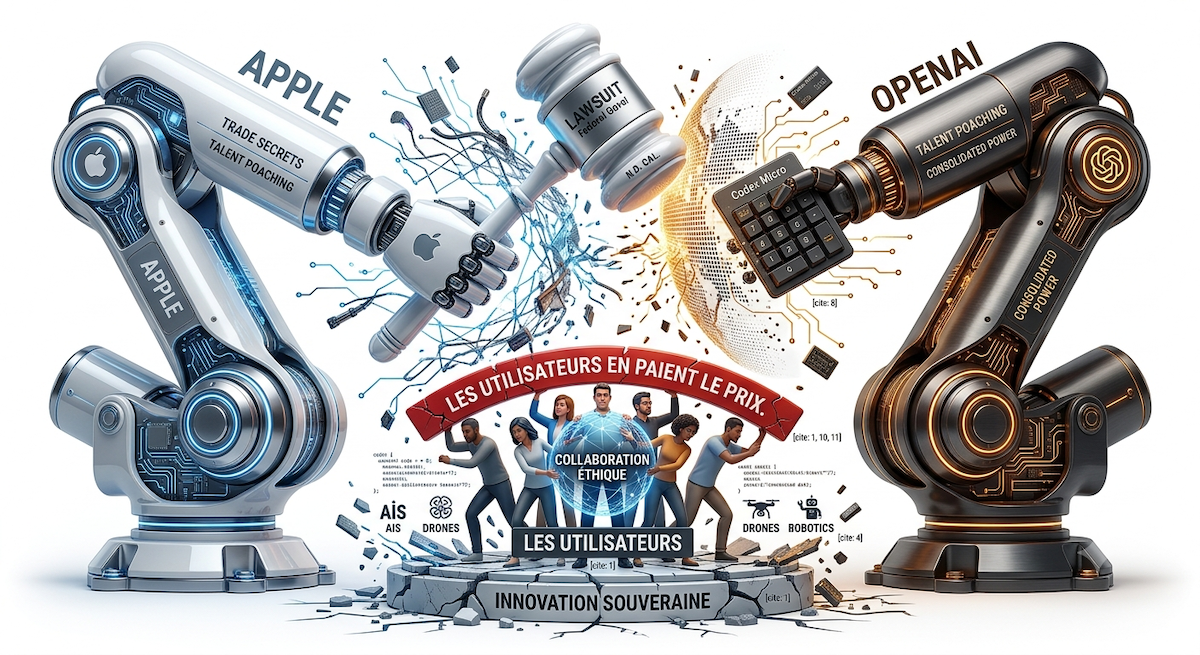
Why this bombshell lands at the perfect moment: in July 2026, as AI permeates our offices and pockets, Apple’s federal lawsuit against OpenAI exposes the inner workings of "innovation" within Big Tech. This is no abstract drama; it is a fierce, high-stakes battle over trade secrets, talent poaching, and control of the tools shaping our future.
As we Gen Z investigators say, we are done with mere surface-level ripples—the shallow chatter of pre-digested information. We question why these giants clash while preaching partnership; common sense tells us that consolidated power serves globalist insiders, not the vast majority of the population. Only true multilateralism—featuring open, collaborative standards that transcend borders and ethical corporate practices—could make AI accessible to everyone, rather than just a handful of elites racing to dominate data, tools, and power.
Let’s look at the facts, cut through the hype, and ask the essential questions...
On July 10, 2026, Apple filed a lawsuit in the Northern District of California against OpenAI, former Apple engineers Chang Liu and Tang Yew Tan (now Director of Hardware at OpenAI), and associated entities such as iIO Products. The allegations are explosive: the systematic theft of trade secrets to supercharge OpenAI’s hardware projects. Chang Liu, a senior electrical systems engineer at Apple for eight years, joined OpenAI in January 2026. Apple alleges that he kept a company MacBook, exploited an authentication bug after leaving (with a message reportedly reading "LOL, I discovered I could access network storage"), and surreptitiously downloaded dozens of files containing product details, specifications, technical presentations, and proprietary, unreleased data. Even more damning, he allegedly advised a colleague to bypass security protocols—switching to apps like LINE—and flagged key documents to review before interviews with OpenAI. Why not report the bug? Common sense suggests this was not merely innocent curiosity.
Tang Yew Tan, a former VP of Product Design with 24 years of experience at Apple creating iconic products, allegedly emailed himself supplier lists and internal analyses, then used OpenAI’s recruitment pipeline for "show-and-tell" sessions where recruits brought physical Apple components, such as circuit boards. Apple describes this as a recurring pattern "at all levels," including misleading manufacturing partners into sharing proprietary techniques by claiming to have Apple’s blessing. The lawsuit characterizes the known incidents as the "tip of the iceberg," citing limited visibility into OpenAI’s internal operations.
OpenAI strongly rejects these accusations, stating it has "no interest in other companies' trade secrets" and remains focused on innovations that benefit the widest possible audience. Legally, Apple’s accusations remain allegations until a court rules on the matter. However, the aggressive poaching of Apple talent—at a time when OpenAI is looking to develop hardware—is no mere coincidence.
Codex Micro: a mere spark amidst a wildfire...
This lawsuit erupts just before the July 15, 2026, launch of Codex Micro—a compact, programmable macro pad developed with Work Louder for OpenAI’s Codex AI coding agent. Teasers promise that "Your favorite Codex shortcuts have just reached a whole new level." While currently hardware aimed at developers, it signals broader ambitions targeting the mass market (think of the Jony Ive connections). Apple alleges that intellectual property theft lies at the heart of these poaching efforts, turning the partnership into an act of predation.
Connecting the dots: globalist tactics, elite power plays, and the "why" behind it all...
Why does this matter beyond the legal dispute? Because it reveals a pattern: poaching talent, exploiting loopholes, and consolidating control over the hardware dimension of the AI that will shape our daily lives. "Friendly" Big Tech alliances (such as OpenAI powering Apple Intelligence) shatter instantly when market dominance is at stake. Globalist proponents thrive in this environment, concentrating power in fewer hands through the biased interpretation of regulations, control over the narrative, and a competitive edge that prioritizes profits over the genuine interests of consumers.
Multilateralism is not naive idealism; it is the only solution that respects the unique cultural characteristics of different nations. It relies on shared open standards, transparent research, and
cross-border collaboration to transform these shadow wars into healthy competition—while acknowledging that human nature is not always driven by good intentions. Such an approach would ensure that AI serves humanity rather than enslaving it, rather than merely catering to the predatory financial interests of Silicon Valley boardrooms. Common sense dictates that centralized innovation breeds abuse, whether in the form of unreported bugs or the misleading of suppliers. This lawsuit is not an isolated incident; it is a symptom of a system rigged to benefit only the elites—those who preach openness while keeping the keys for themselves.
This lawsuit exposes how global tech giants manipulate the system to cement their dominance, reminding us that unchecked concentration threatens balanced, sovereign innovation. Ultimately, in this race for AI supremacy, who is truly serving whom? And who will pay the price if users lack the ability to choose freely and voluntarily between these tools, effectively locking themselves into dependence on a specific provider?
In the end, this saga confirms old patterns: behind the facade of "progress" lies a fierce power struggle, yet we are the ones footing the bill. The real winners? Certainly not the users, who naturally aspire to ethical, collaborative technology. The conclusion is clear: when tech titans clash like this, ordinary citizens lose out. Who truly holds the keys to our shared digital future, and why aren't we demanding greater transparency and multilateral safeguards? As they vie for control over our digital—and soon, physical—future, the crucial question arises: if they cannot play fair with one another, why should we trust them to build the world we want? Consumers can always have the final say: a boycott!
Sources: Official court records (Apple Inc. v. Liu et al., 5:26-cv-07078 on CourtListener); detailed reports from CNBC, the Wall Street Journal, Bloomberg, the New York Times, and Reuters; and public announcements from OpenAI regarding Codex Micro.